Key facts
- SHA was established under the Social Health Insurance Act, 2023, and its functions are set out in law. ([new.kenyalaw.org](https://new.kenyalaw.org/akn/ke/act/2023/16/eng%402023-11-24?utm_source=openai))
- Kenyan media have reported court challenges questioning SHA’s legality and seeking to suspend the rollout. ([citizen.digital](https://citizen.digital/article/petition-filed-to-suspend-sha-digital-health-rollout-over-legality-questions-n382246?utm_source=openai))
- The Ministry of Health says the reforms are anchored on four statutes and are part of Kenya’s UHC strategy. ([health.go.ke](https://www.health.go.ke/duale-outlines-health-sector-reforms-and-uhc-progress-senate?utm_source=openai))
- Nation reporting shows the SHA rollout remains politically contested amid complaints about service delivery and reimbursement delays. ([nation.africa](https://nation.africa/kenya/health/ruto-judge-our-health-reforms-by-patients-experience-not-laws-passed-5562678?utm_source=openai))
- Citizen Digital reported Auditor General concerns over state control of the SHA system. ([citizen.digital](https://citizen.digital/article/state-sinks-ksh1048b-into-sha-system-it-neither-owns-nor-controls-auditor-general-n358565?utm_source=openai))
A political fight meets a legal architecture
The debate over whether Kenya should abolish the Social Health Authority has become one of the sharpest arguments in the country’s health sector, but the authority is not a casual executive programme that can simply be switched off by presidential order. SHA was created under the Social Health Insurance Act, 2023, which established the authority, defined its functions and built the legal machinery for social health insurance in Kenya. That means any move to remove or replace it would have to pass through Parliament and the wider legal framework that now governs the country’s health financing system. ([new.kenyalaw.org](https://new.kenyalaw.org/akn/ke/act/2023/16/eng%402023-11-24?utm_source=openai))
Recent reporting from Kenyan outlets shows the issue has moved beyond technical debate and into the courts and the political arena. Citizen Digital reported in May that a constitutional petition in Kiambu challenged the legality of SHA and related digital health structures, with the petitioner asking the High Court to suspend the rollout over questions about whether the institutions were operating within the law. That legal challenge reflects a broader unease around the transition from the National Hospital Insurance Fund to the new system. ([citizen.digital](https://citizen.digital/article/petition-filed-to-suspend-sha-digital-health-rollout-over-legality-questions-n382246?utm_source=openai))
What SHA was designed to do
The government’s case for SHA rests on the argument that Kenya needed a more coherent framework for universal health coverage. The Social Health Insurance Act gives the authority a wide mandate: registering beneficiaries, managing funds, receiving contributions, empanelling providers, making payments to facilities, and advising the health ministry on social insurance policy. In other words, SHA is not just a payments office; it is the core institution around which the new health financing model is built. ([new.kenyalaw.org](https://new.kenyalaw.org/akn/ke/act/2023/16/eng%402023-11-24?utm_source=openai))
The Ministry of Health has repeatedly defended the reforms as part of a broader universal health coverage push anchored in four statutes: the Social Health Insurance Act, the Digital Health Act, the Primary Health Care Act and the Facility Improvement Financing Act. In an official update to Parliament this year, the ministry said more than 29 million Kenyans had registered and that billions of shillings had already been disbursed through the new system. Those figures are presented by government as evidence that the model is functioning, even if imperfectly. ([health.go.ke](https://www.health.go.ke/duale-outlines-health-sector-reforms-and-uhc-progress-senate?utm_source=openai))
That policy design matters because it makes abolition far more complicated than political rhetoric suggests. If SHA were removed abruptly, Kenya would not just be losing a logo or an office; it would be taking apart a statutory payment and insurance architecture that links contributions, claims settlement, provider contracts and benefit administration. The legal and administrative replacement would need to be ready first, or health financing could fall into a dangerous gap. ([new.kenyalaw.org](https://new.kenyalaw.org/akn/ke/act/2023/16/eng%402023-11-24?utm_source=openai))
Why the criticism has not gone away
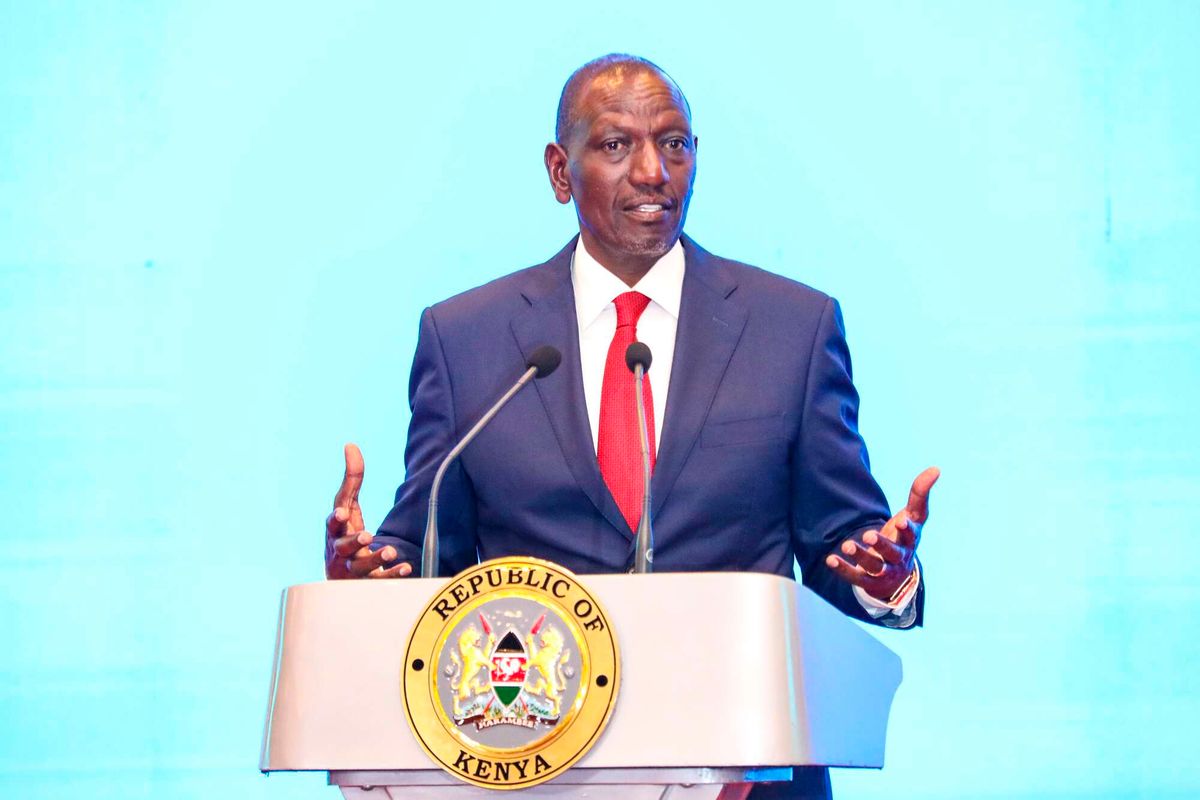
None of that means SHA has escaped public anger. The rollout has been dogged by complaints about delayed reimbursements, confusion over benefits, and uncertainty among hospitals and patients. Reporting by The Standard and Nation in recent months has shown that even as the government insists the system is working, health workers and patients continue to raise concerns about implementation, access, and the pace of reform. Kenya’s health summit in August made the divide visible: President William Ruto defended the reforms, while critics highlighted shortages, staff grievances and public frustration. ([nation.africa](https://nation.africa/kenya/health/ruto-judge-our-health-reforms-by-patients-experience-not-laws-passed-5562678?utm_source=openai))
The controversy is also tied to trust. A previous Citizen Digital report said the Auditor General flagged heavy public spending on the SHA system while warning that the state did not own or control key parts of it. That kind of finding has fed doubts about procurement, accountability and who ultimately benefits from the digital infrastructure behind the health reforms. Even if supporters say these are governance problems to be fixed, they have become central to the public case against the authority. ([citizen.digital](https://citizen.digital/article/state-sinks-ksh1048b-into-sha-system-it-neither-owns-nor-controls-auditor-general-n358565?utm_source=openai))
In that climate, calls to abolish SHA are less a narrow legal proposal than a political expression of frustration. For many Kenyans, the complaint is not only that the authority exists, but that the transition has been messy, that hospitals have not been fully cushioned, and that the promise of universal health coverage still feels distant in practice. That distinction matters: a dysfunctional rollout can invite demands for cancellation even when the underlying law remains intact. ([citizen.digital](https://citizen.digital/article/petition-filed-to-suspend-sha-digital-health-rollout-over-legality-questions-n382246?utm_source=openai))
The legal path to change would be slow and consequential
Under Kenya’s current framework, the authority’s existence is embedded in statute and supported by regulations that took effect in 2024. The regulations require residents to apply for registration and define in detail how membership, contributions, benefits and identification are to work. The fact that Parliament has already enacted and operationalised the model means any effort to dismantle it would likely require amending or repealing the parent law and revisiting the associated regulations. ([new.kenyalaw.org](https://new.kenyalaw.org/akn/ke/act/ln/2024/49/eng%402025-02-28?utm_source=openai))
That is why political leaders defending the system are increasingly describing the debate as one of improvement rather than demolition. The Health ministry says the reforms are meant to move Kenya toward universal health coverage, and senior officials have framed SHA as a constitutional and policy obligation rather than a partisan experiment. Deputy President Kithure Kindiki has also said the government remains committed to making SHA work, arguing that universal health coverage is not optional. ([health.go.ke](https://health.go.ke/ministry-health-accelerates-reforms-achieve-universal-health-coverage?utm_source=openai))
From a governance perspective, the more realistic question is whether Parliament, the courts and the executive can repair what is failing fast enough to preserve public confidence. That could mean faster claims processing, clearer communication on benefits, stronger oversight of contractors, and a more visible response to complaints from hospitals and patients. Without those changes, the political demand to scrap SHA will keep returning, even if the law itself remains stubbornly in place. ([citizen.digital](https://citizen.digital/article/petition-filed-to-suspend-sha-digital-health-rollout-over-legality-questions-n382246?utm_source=openai))
What the battle now means for patients
For patients, the debate can sound abstract, but its consequences are immediate. Kenya’s health financing system affects whether a sick person is admitted, whether a facility is paid on time, and whether families face catastrophic out-of-pocket costs. That is why the argument over SHA has become so emotionally charged: it sits at the point where law, politics and daily survival meet. ([who.int](https://www.who.int/publications/i/item/9789240000162?utm_source=openai))
If the government is right that SHA is becoming the backbone of universal health coverage, then reforming it is urgent. If critics are right that the rollout is flawed enough to undermine confidence, then the state must prove the system can be fixed without deepening harm. What is clear for now is that abolition is not a simple switch, and Kenya’s leaders would need a legally and administratively credible alternative before they could even consider pulling the plug. ([new.kenyalaw.org](https://new.kenyalaw.org/akn/ke/act/2023/16/eng%402023-11-24?utm_source=openai))
Sources
Nation Media Group; Citizen Digital; Kenya Law; Ministry of Health, Kenya; WHO.
Sources: