Key facts
- Kenya’s education sector budget for 2026/27 is Sh784.5 billion, according to Treasury reporting and Kenya News Agency coverage. ([kenyanews.go.ke](https://www.kenyanews.go.ke/kenya-raises-education-budget-to-sh784-5-billion-as-government-steps-up-reforms/?utm_source=openai))
- The allocation is higher than the Sh702 billion provided in 2025/26. ([kenyanews.go.ke](https://www.kenyanews.go.ke/kenya-raises-education-budget-to-sh784-5-billion-as-government-steps-up-reforms/?utm_source=openai))
- Treasury’s figures cited in the reporting split the vote across the Teachers Service Commission, basic education, higher education, science and innovation, and TVET. ([kenyanews.go.ke](https://www.kenyanews.go.ke/kenya-raises-education-budget-to-sh784-5-billion-as-government-steps-up-reforms/?utm_source=openai))
- Beatrice Inyangala said Kenya is strengthening reform through teacher retooling, better education data, equity programmes and skills recognition. ([kenyanews.go.ke](https://www.kenyanews.go.ke/kenya-raises-education-budget-to-sh784-5-billion-as-government-steps-up-reforms/?utm_source=openai))
- The EAC said the Nairobi conference focused on improving learning outcomes, teachers, skills and equity across partner states. ([eac.int](https://www.eac.int/press-releases/138-education%2C-science-technology-news/3585-eac-steps-up-regional-action-on-education-as-nairobi-conference-calls-for-stronger-cooperation?utm_source=openai))
A bigger education vote, and a familiar test
Kenya has increased its education budget to Sh784.5 billion for the 2026/27 financial year, according to the National Treasury and reporting from the Kenya News Agency. The allocation is higher than the Sh702 billion provided in the previous year and is being presented by officials as evidence that education remains one of the government’s top priorities. Treasury figures show the sector will absorb a large share of public spending, while the package is spread across the Teachers Service Commission, basic education, higher education, science and innovation, and technical and vocational training. ([kenyanews.go.ke](https://www.kenyanews.go.ke/kenya-raises-education-budget-to-sh784-5-billion-as-government-steps-up-reforms/?utm_source=openai))
The announcement matters because education in Kenya is not just another line item. It is the country’s largest social investment, the system through which the government seeks to manage access, equity, skills formation and social mobility at the same time. But a higher nominal allocation does not automatically mean a higher real investment in classrooms, laboratories, training or learner support. The principal challenge, as the officials themselves acknowledged, is whether the money will be translated into timely releases, targeted programmes and measurable improvements in outcomes. ([kenyanews.go.ke](https://www.kenyanews.go.ke/kenya-raises-education-budget-to-sh784-5-billion-as-government-steps-up-reforms/?utm_source=openai))
What the budget covers
Treasury’s 2026/27 proposal breaks the education vote into several major sub-sectors. The Kenya News Agency report says Sh424.3 billion is earmarked for the Teachers Service Commission, Sh136.6 billion for basic education, Sh163.9 billion for higher education, Sh58.5 billion for technical and vocational education and training, and Sh1.3 billion for science, innovation and research. In an earlier Treasury budget presentation, officials also said the wider education allocation would support teachers, learners, infrastructure, and higher education financing, including support for school improvement programmes and student loans. ([kenyanews.go.ke](https://www.kenyanews.go.ke/kenya-raises-education-budget-to-sh784-5-billion-as-government-steps-up-reforms/?utm_source=openai))
These allocations suggest the government is trying to do several things at once: pay for the workforce already in the system, keep the basic education chain functioning, finance universities and TVET institutions, and preserve a pipeline for research and innovation. That spread is politically important because each sub-sector has its own pressures. Teacher payrolls are expensive. Basic education faces enrollment growth and infrastructure strain. Universities continue to wrestle with financing models. And TVET expansion is being asked to deliver more visible labour-market returns. ([kenyanews.go.ke](https://www.kenyanews.go.ke/kenya-raises-education-budget-to-sh784-5-billion-as-government-steps-up-reforms/?utm_source=openai))
Teacher recruitment remains central
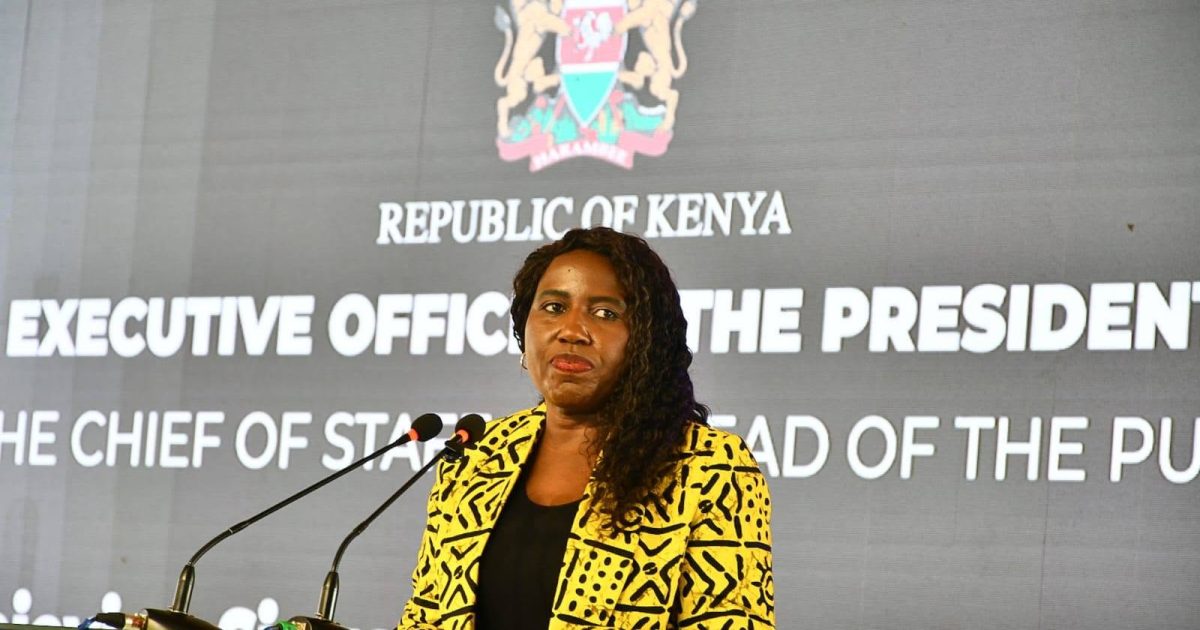
Principal Secretary for Higher Education and Research Beatrice Inyangala said the increased budget shows a commitment to strengthening the education sector and improving learning outcomes. Her comments, made during the Second East African Community Regional Conference on Education in Nairobi, reflected a wider government message: that reform is not only about spending more, but about directing money toward teachers, equity and system management. ([kenyanews.go.ke](https://www.kenyanews.go.ke/kenya-raises-education-budget-to-sh784-5-billion-as-government-steps-up-reforms/?utm_source=openai))
Teacher supply remains one of the most sensitive issues in the Kenyan education debate. Officials say thousands of teachers have been recruited in recent years, but staffing gaps still persist, especially in primary and junior secondary schools and in regions where distribution remains uneven. Inyangala said recruitment and deployment planning must keep pace with enrollment growth, which is an important admission that the system is still catching up with demographic and policy changes rather than comfortably ahead of them. ([kenyanews.go.ke](https://www.kenyanews.go.ke/kenya-raises-education-budget-to-sh784-5-billion-as-government-steps-up-reforms/?utm_source=openai))
That pressure matters because Kenya’s Competency-Based Education rollout depends on more than curriculum documents. It requires teachers who understand the pedagogy, have had practical retooling and can adjust to more learner-centered instruction. Inyangala said the government is prioritising retooling teachers so they can deliver competency-based education using innovative pedagogy, and the broader Treasury and government messaging shows that ICT training and professional development are being treated as part of the same reform package. ([kenyanews.go.ke](https://www.kenyanews.go.ke/kenya-raises-education-budget-to-sh784-5-billion-as-government-steps-up-reforms/?utm_source=openai))
Equity, data and the case for evidence-based planning
A notable theme in the government’s presentation is equity. Inyangala pointed to the Kenya Primary Education Equity in Learning Programme and the National Assessment System for Monitoring Learner Achievement as examples of interventions designed to identify disparities and improve learning outcomes. That is significant because Kenya’s education challenge is not only national averages, but uneven performance by geography, income and school type. ([kenyanews.go.ke](https://www.kenyanews.go.ke/kenya-raises-education-budget-to-sh784-5-billion-as-government-steps-up-reforms/?utm_source=openai))
She also highlighted the Kenya Education Management Information System, or KEMIS, as a tool for improving accountability through better data management. The idea is straightforward: if the state can track learners, schools and resources more accurately, it can plan better, allocate money more fairly and monitor whether policies are working. That is an appealing proposition, but it also depends on execution. Data systems are only as useful as the consistency of the information entered into them and the willingness of institutions to use them for real decisions rather than just compliance reporting. ([kenyanews.go.ke](https://www.kenyanews.go.ke/kenya-raises-education-budget-to-sh784-5-billion-as-government-steps-up-reforms/?utm_source=openai))
Inyangala’s warning that nominal increases do not necessarily equal real gains is especially relevant in a budget environment affected by inflation, wage obligations and competing demands. Her call to monitor expenditure against both the national budget and GDP is a reminder that raw shilling amounts can flatter a sector if prices are rising or if allocations are absorbed by fixed costs. The government’s own figures show the education vote is large, but large budgets still need careful scrutiny to ensure the money reaches the intended learners. ([kenyanews.go.ke](https://www.kenyanews.go.ke/kenya-raises-education-budget-to-sh784-5-billion-as-government-steps-up-reforms/?utm_source=openai))
Skills, recognition of prior learning and the informal economy
Beyond schools and universities, the government is also trying to connect education policy with the labour market. Inyangala said Kenya is strengthening skills development through Recognition of Prior Learning, a framework that can formally assess skills gained through informal, non-formal and experiential learning. In a country where a large share of economic activity takes place outside the formal sector, that approach could help workers convert practical ability into recognized qualifications. ([kenyanews.go.ke](https://www.kenyanews.go.ke/kenya-raises-education-budget-to-sh784-5-billion-as-government-steps-up-reforms/?utm_source=openai))
That shift is important because many Kenyans acquire valuable skills through apprenticeships, family businesses, self-employment or years of work without formal certification. If the RPL process is credible and accessible, it could create new routes into employment, further study and better pay. If it is slow, expensive or poorly publicized, it risks becoming another policy idea with limited reach. ([kenyanews.go.ke](https://www.kenyanews.go.ke/kenya-raises-education-budget-to-sh784-5-billion-as-government-steps-up-reforms/?utm_source=openai))
The emphasis on skills also fits with the government’s broader push into TVET. Treasury’s figures show the sector receiving Sh58.5 billion, and earlier budget commentary suggested additional support for students through loans and for programmes that improve training relevance. That matters because Kenya has long argued that education must do more than produce exam results; it must also produce workers who can help the economy diversify, innovate and grow. ([kenyanews.go.ke](https://www.kenyanews.go.ke/kenya-raises-education-budget-to-sh784-5-billion-as-government-steps-up-reforms/?utm_source=openai))
Funding school re-entry, inclusion and regional cooperation
Inyangala also linked education finance to social support. She said returning children who have dropped out of school is more effective when it is paired with cash transfers, community engagement and re-entry programmes. That point reflects a practical truth: dropout is rarely solved by classroom policy alone. Poverty, family instability, migration and local hardship often determine whether a child stays in school, and those pressures require coordinated interventions beyond the education ministry. ([kenyanews.go.ke](https://www.kenyanews.go.ke/kenya-raises-education-budget-to-sh784-5-billion-as-government-steps-up-reforms/?utm_source=openai))
The PS further noted that refugee and host-community learners have been integrated into national programmes, a sign that Kenya is trying to treat inclusion as part of mainstream education planning rather than as a side project. That is especially relevant in a country that hosts displaced populations and has long positioned itself as a regional education hub. ([kenyanews.go.ke](https://www.kenyanews.go.ke/kenya-raises-education-budget-to-sh784-5-billion-as-government-steps-up-reforms/?utm_source=openai))
The setting for the announcement also mattered. The Second East African Community Regional Conference on Education brought together policymakers and stakeholders to discuss how to make education systems more resilient and future-ready. The EAC said the conference opened with calls for stronger investment in teachers, skills and equity, suggesting that Kenya’s budget debate is being watched not only domestically but across the region. ([eac.int](https://www.eac.int/press-releases/138-education%2C-science-technology-news/3585-eac-steps-up-regional-action-on-education-as-nairobi-conference-calls-for-stronger-cooperation?utm_source=openai))
The political and fiscal stakes
Kenya’s education budget is always politically sensitive because it sits at the intersection of households, public sector employment and long-term national ambition. Parents want reliable schools. Teachers want fair pay and support. Universities want sustainable financing. TVET leaders want relevance. And the state wants a system that can reduce inequality while boosting productivity. The Sh784.5 billion allocation is therefore more than a spending line; it is a statement about where the government believes the country’s future value will come from. ([kenyanews.go.ke](https://www.kenyanews.go.ke/kenya-raises-education-budget-to-sh784-5-billion-as-government-steps-up-reforms/?utm_source=openai))
Still, the central policy question is whether Kenya can turn budget growth into measurable gains. That means faster teacher deployment where shortages are worst, more consistent funding for school improvement plans, better data use through KEMIS, stronger support for vulnerable learners, and a credible pathway for universities and TVET institutions to deliver usable skills. Without those outcomes, the allocation risks being remembered as a large promise rather than a durable reform milestone. ([kenyanews.go.ke](https://www.kenyanews.go.ke/kenya-raises-education-budget-to-sh784-5-billion-as-government-steps-up-reforms/?utm_source=openai))
For now, the signal from Nairobi is clear: education remains one of the government’s most heavily defended priorities, and the administration is betting that bigger, more targeted spending can repair weaknesses that have accumulated over years. Whether that bet pays off will depend less on the headline figure than on the discipline of implementation in the months ahead. ([kenyanews.go.ke](https://www.kenyanews.go.ke/kenya-raises-education-budget-to-sh784-5-billion-as-government-steps-up-reforms/?utm_source=openai))
Sources: