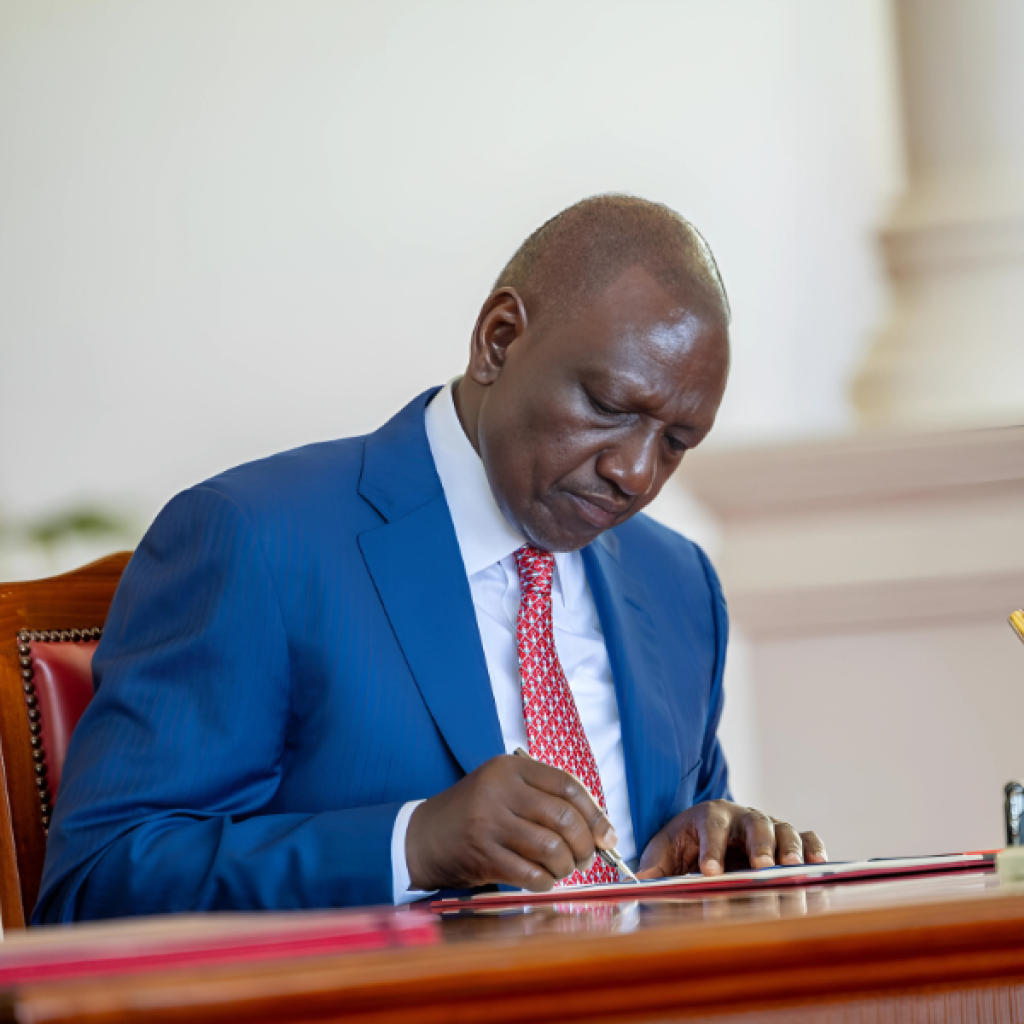
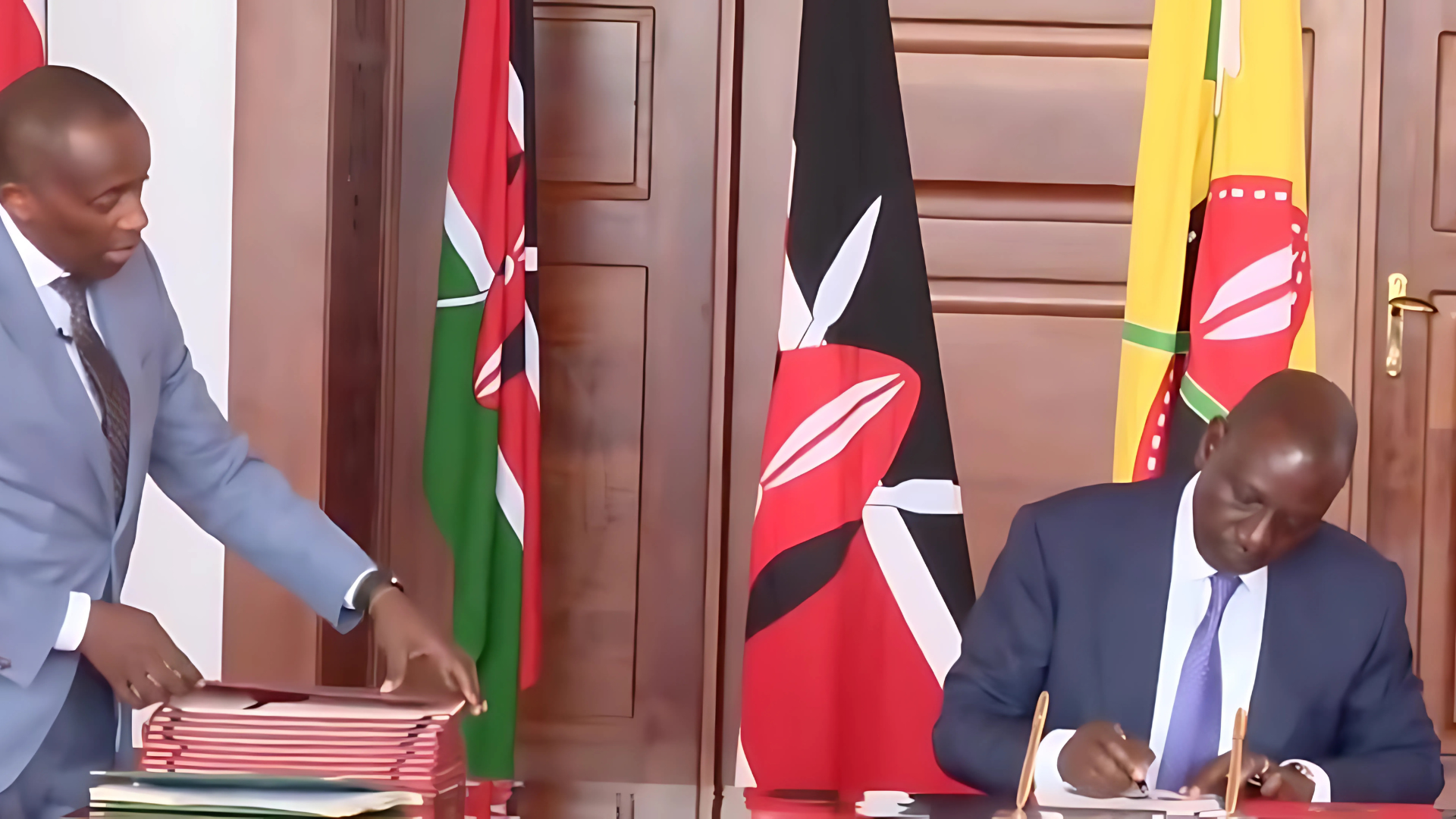
In a significant move to shape Kenya’s fiscal landscape for the 2025/2026 financial year, President William Ruto assented to three pivotal National Assembly Bills on June 26, 2025, during a ceremony at State House, Nairobi. The Finance Bill 2025, Appropriations Bill, and Supplementary Appropriation (No. 3) Bill were officially enacted, authorizing a Ksh1.88 trillion budget and introducing tax reforms aimed at balancing economic growth with public relief. The signing, attended by senior parliamentary leaders, occurred against the backdrop of heightened public scrutiny, as memories of the 2024 Finance Bill protests, which forced Ruto to withdraw that year’s bill, loomed large. The new laws reflect the government’s attempt to address economic challenges while navigating a politically charged environment marked by Gen Z-led activism and calls for fiscal accountability.
The Finance Bill 2025, a cornerstone of Kenya’s fiscal policy, introduces amendments to several tax laws, including the Income Tax Act, Value Added Tax Act, Excise Duty Act, and Tax Procedures Act. Unlike its 2024 predecessor, which sparked nationwide unrest over proposed taxes on essentials like bread, the 2025 bill was crafted with greater public input, incorporating lessons from the previous year’s backlash. Key provisions include expanded mortgage interest relief, allowing Kenyans to qualify whether they purchase or build homes through SACCOs, personal loans, or traditional lenders. The bill also avoids new PAYE tax bands, restricts the Kenya Revenue Authority’s access to personal data, and introduces zero-rated taxes on essential commodities. “We’ve listened to Kenyans,” said Treasury Cabinet Secretary John Mbadi during a June 12 budget reading. “This bill is about fairness—supporting businesses while easing the burden on ordinary citizens.”
Corporate tax breaks for key sectors, such as agriculture and manufacturing, aim to stimulate investment, while measures like reduced capital gains tax to 5 percent for long-term investments have drawn praise from financial analysts. “This is a step toward making Kenya more attractive for investors,” said Nairobi-based economist Sarah Wambui. “Lowering capital gains tax could spur growth in the stock market and real estate.” However, the bill’s passage was not without tension. Public participation sessions revealed lingering distrust, with some Kenyans questioning the government’s commitment to austerity. “We need to see real cuts in wasteful spending,” said Jane Otieno, a small business owner in Kitengela. “Tax relief is good, but it’s not enough if the government doesn’t live within its means.”
The Appropriations Bill 2025, also signed into law, authorizes the National Treasury to withdraw Ksh1.88 trillion from the Consolidated Fund to finance government operations for the year ending June 30, 2026. Of this, Ksh1.81 trillion is allocated for recurrent expenditure, covering salaries, utilities, and daily operations, while Ksh744.52 billion is earmarked for development projects. Ministries, Departments, and Agencies are permitted to utilize Ksh671.99 billion as Appropriation-in-Aid, funds collected internally to support programs. The budget prioritizes agriculture and food security, with Ksh47.6 billion allocated to reduce reliance on imports, including Ksh10.2 billion for value chain development and Ksh8 billion for fertilizer subsidies. “Agriculture is the backbone of our economy,” Ruto said during the signing. “These funds will empower our farmers and ensure food on every table.”
The Supplementary Appropriation (No. 3) Bill 2025 addresses financing gaps from the previous fiscal year, boosting recurrent spending by Ksh138.87 billion to cover staff emoluments and operational costs. Notable allocations include Ksh18 billion to the Teachers Service Commission for insurance, promotions, and salary deficits, Ksh16 billion for university education, and Ksh7.5 billion for the National Police Service, with Ksh5 billion addressing insurance shortfalls. Infrastructure and health sectors also received boosts, with Ksh16 billion for roads, Ksh1.7 billion for Kenyatta National Hospital, and Ksh600 million for primary healthcare networks. “These funds are about delivering services to Kenyans,” said Deputy Speaker Gladys Boss, who sponsored the bill. “From teachers to police officers, we’re ensuring our workforce is supported.”
The signing comes amid a complex political and economic context. Kenya’s national debt, exceeding $80 billion, and a youth unemployment rate of nearly 20 percent continue to fuel public discontent. The 2024 Finance Bill protests, which resulted in over 60 deaths and the storming of Parliament, forced Ruto to withdraw the bill and implement austerity measures, including cuts to his office’s travel and hospitality budgets. The 2025 bills reflect a cautious approach, balancing revenue generation with public demands for relief. “We’ve learned from last year,” said a senior aide to Ruto. “The government is committed to transparency and public engagement.” Yet, protests on June 25, 2025, commemorating the 2024 unrest, disrupted cities like Nairobi and Kitengela, with businesses like Pizza Inn suffering looting, underscoring ongoing tensions.
Public reaction to the bills has been mixed. In Nairobi’s Central Business District, traders expressed cautious optimism about the tax relief measures. “Not paying extra taxes on essentials is a relief,” said Peter Mwangi, a shop owner. “But we need to see these funds used wisely—no more scandals.” On social media platforms like X, sentiments varied, with some users praising the agricultural investments and others criticizing the government’s debt management. “Ksh1.88 trillion is a lot of money,” posted a user identifying as a Mombasa resident. “Where’s the accountability for how it’s spent?” The Kenya National Commission on Human Rights called for greater oversight, citing concerns about corruption undermining the budget’s impact.
The government’s focus on agriculture reflects efforts to address food insecurity, a pressing issue as inflation hovers around 5 percent, down from 8 percent in 2023. The fertilizer subsidy, increased to Ksh8 billion, aims to lower production costs for farmers like Esther Wanjiku in Nakuru. “Fertilizer prices have been a burden,” she said. “This could help us plant more and sell at better prices.” However, critics argue that the budget’s reliance on recurrent spending, which consumes 70 percent of the allocation, limits long-term development. “We’re spending too much on salaries and not enough on infrastructure,” said economist X. N. Iraki. “Development projects are what create jobs for the youth.”
The Supplementary Appropriation Bill also allocates Ksh8 billion to the Kenya Revenue Authority to address staff emoluments, a move seen as critical to maintaining tax collection efficiency. Additional funds for drought mitigation (Ksh5 billion) and tourism promotion (Ksh4.6 billion) aim to bolster economic resilience. The judiciary received Ksh470 million to enhance operations, while Ksh700 million was allocated for dairy processing to support farmers. “These are targeted interventions,” said Mbadi. “We’re addressing immediate needs while building a foundation for growth.” Yet, the increased recurrent spending has raised concerns about fiscal discipline, with Kenya’s debt servicing consuming 61 percent of tax revenue.
The bills’ passage followed intense parliamentary debates, with the National Assembly approving them on June 20, 2025. Unlike the 2024 Finance Bill, which faced fierce opposition, the 2025 version incorporated public feedback, such as removing taxes on mobile money transfers and financial services. The Kenya Kwanza administration emphasized its commitment to fiscal consolidation, with Ruto noting that the shilling’s strengthening against the dollar and a 5.6 percent GDP growth in 2023 reflect progress. “We’re pulling Kenya back from debt distress,” he said, citing the recent repayment of a $2 billion Eurobond. However, opposition leaders, including Raila Odinga, argued that the budget fails to address youth unemployment adequately. “The government must prioritize jobs, not just taxes,” Odinga said at a Kisumu rally.
Civil society groups have urged greater transparency in budget implementation. The Institute of Public Finance Kenya highlighted risks of mismanagement, pointing to past scandals involving misallocated funds. “Kenyans deserve to know how every shilling is spent,” said director James Muraguri. The government has promised regular audits and public reporting to address these concerns. Meanwhile, the business community, particularly in agriculture, welcomed the fertilizer and value chain investments. “These funds could transform rural economies,” said a Nakuru farmer cooperative leader. “But we need to see them reach the ground.”
As Kenya embarks on the 2025/2026 fiscal year, the signed bills set the stage for a delicate balancing act. The government aims to stimulate growth while addressing public demands for accountability and relief. For citizens like Otieno, the shop owner, the success of these laws depends on tangible outcomes. “We’re tired of promises,” she said. “We want to see schools built, roads fixed, and jobs created.” With protests still fresh in the public’s memory, Ruto’s administration faces pressure to deliver on its pledges while maintaining stability in a nation hungry for change.