By Brenda Wereh11 Aug, 202534 mins read 1,976 views
0 comments 0 likes
Mombasa police have arrested two suspects and seized a large quantity of cannabis following a public tip-off. The operation targeted a suspicious parcel from Homa Bay at Mwembe Tayari.
Mombasa’s bustling Mwembe Tayari area became the stage for a dramatic police operation that culminated in the arrest of two suspected drug traffickers and the seizure of a significant haul of cannabis sativa. This high-stakes bust, executed with precision by officers from Mombasa Central Police Station, was triggered by a vigilant public tip-off, underscoring the critical role of community cooperation in combating drug trafficking. The suspects, identified as Pamela Akinyi Ochichi and Daniel Agolla Ogweno, were apprehended as they attempted to claim a suspicious parcel arriving from Homa Bay. This incident not only highlights the ongoing battle against narcotics in Kenya’s coastal region but also reflects the broader challenges of tackling drug smuggling in a key port city like Mombasa.
The operation began with a tip from an alert member of the public who noticed a suspicious parcel being offloaded from a bus at Mwembe Tayari, a busy transport hub in Mombasa. The bus had arrived from Homa Bay, a region in western Kenya, and the package raised immediate concerns about potential narcotics. According to the DCI, officers from Mombasa Central Police Station acted swiftly, moving discreetly to the bus booking office where the parcel was scheduled for collection.
The police adopted a tactical approach, described vividly by the DCI as officers moving “with the precision of hawks circling their prey.” They lay in wait, observing the scene until the suspects, Pamela Akinyi Ochichi and Daniel Agolla Ogweno, arrived to claim the parcel. Unaware that they were under surveillance, the duo approached the counter casually, only to be apprehended in a swift and coordinated move by plainclothes officers. The suspects, along with the suspicious package, were promptly escorted to Mombasa Central Police Station for further investigation.
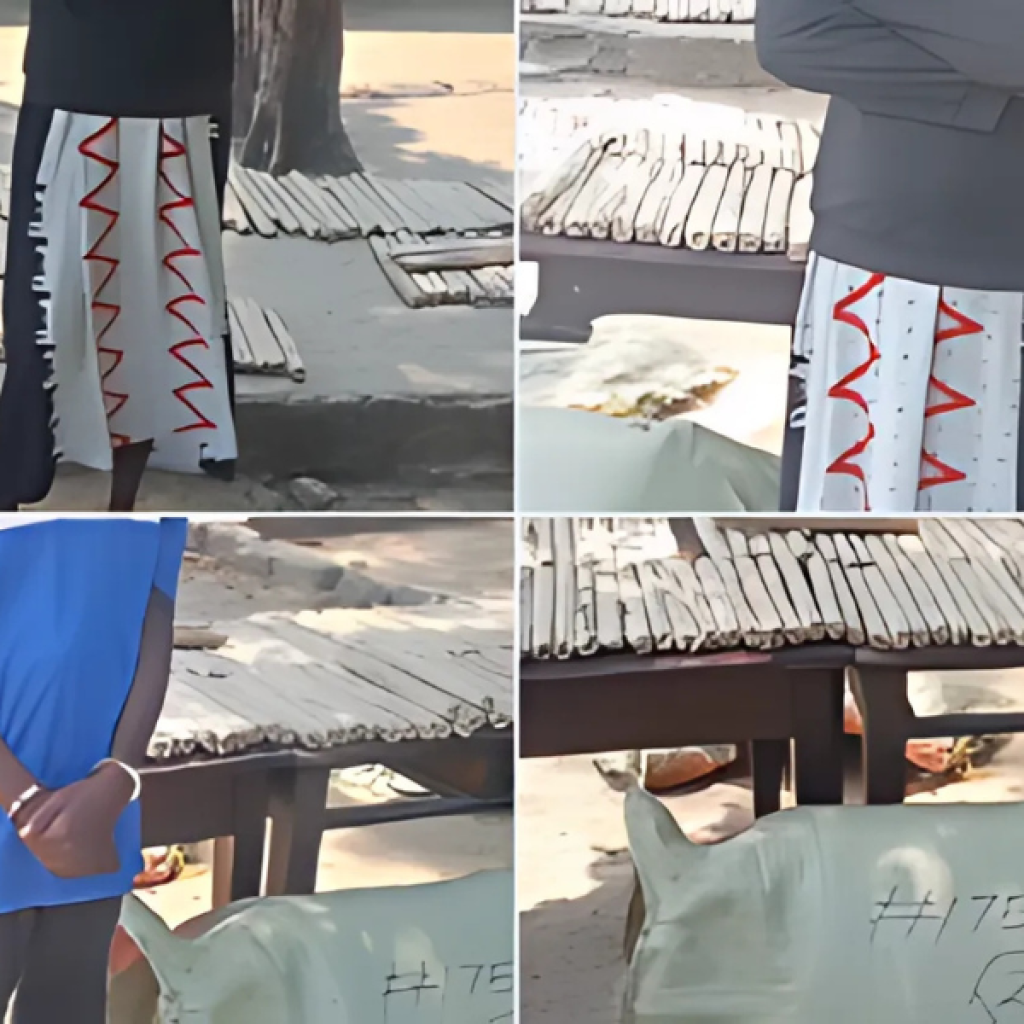
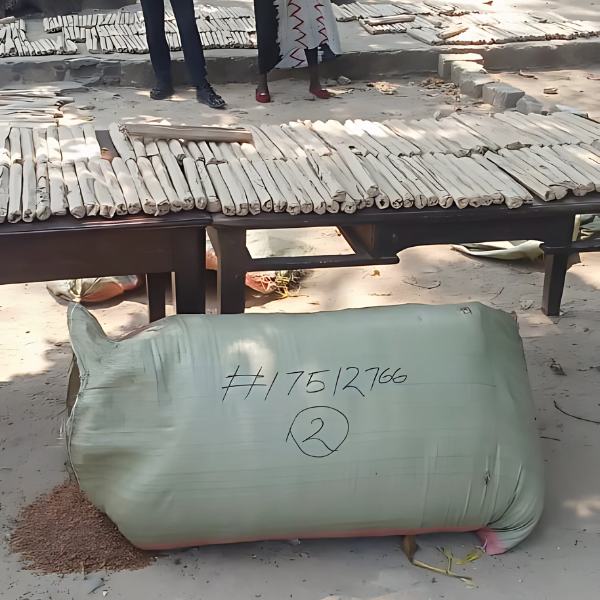
Upon inspection, the parcel was found to contain multiple rolls of cannabis sativa, carefully concealed to evade detection. Reports indicate that the haul weighed approximately 90 kilograms, a significant quantity that points to a sophisticated trafficking attempt. The DCI shared images of the suspects alongside the seized gunny bag, emphasizing the scale of the bust. The suspects are currently in custody, undergoing processing pending arraignment, while the narcotics have been secured as evidence for the upcoming court proceedings.
Mombasa’s strategic location as a major port city and a gateway to East Africa makes it a prime target for drug trafficking networks. Its coastal position facilitates the movement of illicit goods, with narcotics often smuggled through maritime routes or transported from other regions of Kenya, as seen in this case with the parcel originating from Homa Bay. The city’s vibrant transport hubs, like Mwembe Tayari, serve as critical nodes for both legitimate commerce and illicit activities, making them focal points for law enforcement vigilance.
This recent bust is part of a broader wave of anti-narcotics operations in Mombasa and surrounding areas. Just days earlier, on August 4, 2025, police at the Watiti Roadblock in Wajir County arrested a man transporting three kilograms of cannabis on a motorbike, also following a public tip-off. Similarly, on August 8, 2025, officers in Nyeri uprooted a suspected cannabis plantation in Kigogoini, though the perpetrators in that case remain at large. These incidents highlight a pattern of increased law enforcement activity and community-driven intelligence in the fight against drugs.
In another significant operation, on September 23, 2024, Mombasa police seized 10 sacks of marijuana weighing 314.05 kilograms, with an estimated street value of Ksh9,421,500, in the Corner ya Chief area. On September 20, 2024, authorities arrested a suspect in Kiambeni and recovered 864.9 kilograms of cannabis worth Ksh25,407,000. These high-value seizures indicate the scale of the drug trade in the region and the determination of law enforcement to disrupt it.
The success of the August 10 operation owes much to the vigilance of the public. The tip-off that sparked the bust came from an observant individual who noticed the suspicious parcel and promptly alerted authorities. This act of civic responsibility underscores the importance of community engagement in combating crime, particularly in a region like Mombasa, where drug trafficking networks exploit the city’s connectivity and population density.
The DCI has repeatedly acknowledged the public’s role in recent anti-narcotics successes. In a statement following the Mwembe Tayari bust, the agency praised the “sharp eye and quick action” of the informant, noting that “community vigilance plays a vital role in the war against drug trafficking.” Similar sentiments were expressed after the Nyeri and Wajir operations, with the National Police Service emphasizing that public cooperation is a cornerstone of their strategy to eliminate illegal drugs.
This reliance on community tips reflects a broader trend in Kenyan law enforcement, where public trust and collaboration are increasingly seen as critical tools. However, it also raises questions about the safety and anonymity of informants, as well as the need for sustained community education to maintain this level of engagement without fostering fear or mistrust.
The Mwembe Tayari bust is a microcosm of Kenya’s ongoing battle against drug trafficking and abuse. The country has faced significant challenges with narcotics, including cannabis, heroin, and synthetic drugs, which have fueled addiction, crime, and social instability. Coastal Kenya, in particular, has long been a hotspot due to its proximity to international shipping routes and its role as a transit point for drugs destined for other parts of Africa and beyond.
Recent operations demonstrate a multi-pronged approach by Kenyan authorities, combining intelligence-led policing, public cooperation, and targeted crackdowns. For instance, on August 16, 2024, police at the Mariakani weighbridge in Mombasa seized 456 kilograms of cannabis worth Ksh13 million, hidden in a vehicle alongside 16 sacks and 226 large sticks of the drug. The operation, conducted by detectives from Moi International Airport and the Anti-Narcotics Unit, was also triggered by a public tip-off.
In another case, on September 20, 2024, Mombasa’s Anti-Narcotics Unit arrested a suspect in the Kadzadani area and seized 864.9 kilograms of cannabis valued at Ksh25.4 million. These high-profile busts, coupled with smaller operations like the one in Makaburini, where a suspect was nabbed with 80 rolls of cannabis, illustrate the relentless pressure being applied to drug networks.
Despite these successes, challenges remain. The escape of suspects in some cases, such as the Nyeri plantation incident, highlights the need for improved coordination and resources. Additionally, the sheer volume of cannabis seized in recent months suggests that trafficking networks are resilient and adaptive, requiring sustained and innovative strategies to dismantle them.
The Mwembe Tayari bust carries several implications for law enforcement in Mombasa and beyond. First, it reinforces the effectiveness of intelligence-led operations and the value of real-time public tips. The swift response and strategic patience of the Mombasa Central Police Station officers demonstrate a high level of professionalism and coordination, which could serve as a model for other regions.
However, the frequency and scale of cannabis seizures in Mombasa also point to deeper systemic issues. The city’s role as a trafficking hub suggests that supply chains are well-established, likely involving networks that span multiple regions and even countries. Disrupting these networks requires not only local operations but also international cooperation, particularly given Mombasa’s maritime connections.
Moreover, the reliance on public tips, while effective, places a burden on communities to remain vigilant while navigating potential risks. Ensuring the safety of informants and fostering trust between law enforcement and the public will be critical to sustaining this approach. Additionally, the processing and prosecution of suspects must be swift and transparent to deter future trafficking attempts and maintain public confidence in the justice system.
The proliferation of drugs like cannabis in Mombasa has far-reaching social consequences. Beyond the immediate risks of addiction and crime, drug trafficking undermines economic development and public health. Mombasa, a city with a vibrant tourism industry and a growing economy, cannot afford to be seen as a haven for illicit activities. The sentiments expressed by local leaders, such as those voiced by @A_S_Nassir on X, reflect a broader community resolve to resist the drug trade and protect the city’s future.
To address these challenges, a multi-faceted approach is needed. This includes continued investment in law enforcement training and resources, public awareness campaigns to educate communities about the dangers of drugs, and rehabilitation programs for those affected by addiction. Collaboration with regional and international partners will also be crucial to tackle the transnational nature of drug trafficking.
The arrest of Pamela Akinyi Ochichi and Daniel Agolla Ogweno in Mombasa on August 10, 2025, marks a significant victory in Kenya’s fight against drug trafficking. The operation, driven by a public tip-off and executed with precision, underscores the power of community-law enforcement collaboration. However, it also highlights the persistent challenge of combating well-entrenched drug networks in a strategic hub like Mombasa.
As authorities continue to clamp down on narcotics, the lessons from this bust—vigilance, coordination, and public engagement—will be critical to sustaining momentum. For Mombasa and Kenya as a whole, the path forward lies in balancing enforcement with prevention, ensuring that communities are empowered to resist the drug trade while law enforcement remains equipped to act decisively. The Mwembe Tayari operation is a reminder that, with collective effort, the tide can be turned against the scourge of drugs.
Former Kiambu Governor Ferdinand Waititu has secured a major bail reprieve from the High Court, with Justice Winfrida Okwany reducing his bail from Sh53.5 million to Sh20 million cash pending appeal in his ongoing corruption case.
Kenya National Highways Authority names Eng. Luka Kipchumba Kimeli as Director General while Kenya Roads Board appoints Judith Otsyula to the same role in major leadership changes for Kenya's roads sector.
Kenya’s Committee on Communication, Information and Innovation has rejected calls for a complete ban on TikTok, instead proposing mandatory local storage of Kenyan user data and full compliance with national laws in a report adopted for debate in the National Assembly.