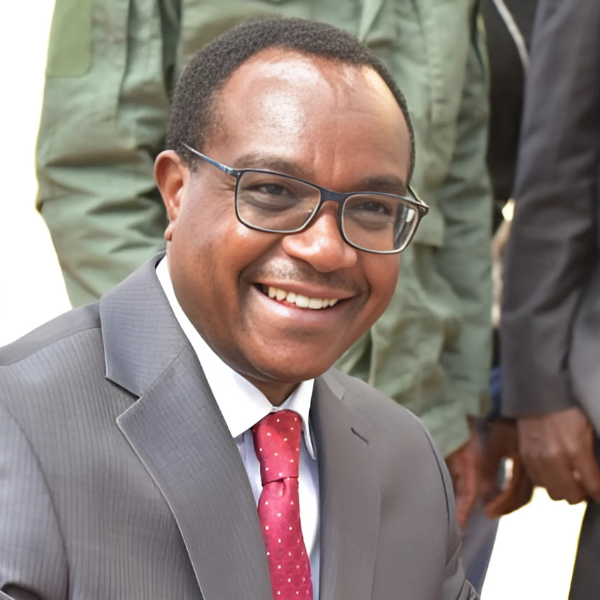
The Kenya Universities Staff Union (KUSU) has issued a strike threat over the government's delay in commencing negotiations for the 2025–2029 Collective Bargaining Agreement (CBA). The union demands immediate action to safeguard workers' rights in public universities.
A looming crisis in Kenyans education sector as the Kenya Universities Staff Union (KUSU) issued a stern warning of a potential nationwide strike, citing the government’s failure to initiate negotiations for the 2025–2029 Collective Bargaining Agreement (CBA). The announcement, made by KUSU Secretary General Charles Mukhwaya during an interview on Spice FM, has sent shockwaves through Kenya’s public university system, threatening to disrupt learning for thousands of students.
The 2025–2029 CBA is intended to succeed the current 2021–2025 agreement, which is still in effect but has been fraught with implementation challenges. KUSU’s frustration stems from the government’s failure to convene a joint negotiating committee to discuss the new CBA, despite the union submitting proposals to university councils and relevant agencies. Mukhwaya emphasized that no structured dialogue has been initiated, dismissing claims that the agreement was ready for signing. “The 2025–2029 CBA is supposed to be negotiated. Contrary to information out there, it is not ready for signing. We ought to have negotiated, signed, and begun implementation as of July 2025,” he stated, highlighting the urgency of the situation.
The union’s demands include fair salary increments, harmonized retirement ages, improved allowances, and comprehensive medical cover for university staff. These issues echo longstanding grievances, as KUSU and its counterpart, the Universities Academic Staff Union (UASU), have repeatedly clashed with the government over delayed or unfulfilled CBAs. The current delay is particularly concerning as it risks derailing academic calendars, with Mukhwaya warning that continued inaction could force the union to resort to industrial action, potentially paralyzing operations across Kenya’s 35 public universities.
The threat of a strike is not a new phenomenon in Kenya’s higher education sector. In September 2024, KUSU and UASU launched a nationwide strike that crippled learning, citing the government’s failure to fully implement the 2021–2025 CBA. The strike, which began on September 18, 2024, was called off on September 26 after negotiations led by Labour Cabinet Secretary Alfred Mutua resulted in a return-to-work formula. The agreement promised a 7–10% salary increment and an automatic 4% annual increment, backdated to July 2023, with a total budget of Sh9.7 billion to be disbursed in three tranches.
However, the implementation of this agreement faced hurdles. By October 2024, UASU resumed strike action, accusing the government of failing to honor the agreed terms. The union rejected a Sh4.3 billion offer for the first phase, insisting on the full Sh9.7 billion as stipulated. The Employment and Labour Court declared the strike illegal on October 30, 2024, ordering both parties to resume negotiations. By November 25, 2024, lecturers returned to work after the government committed to the full implementation of the 2021–2025 CBA, with the first tranche of Sh4.3 billion covering nine months up to June 2025.
This turbulent history underscores a recurring pattern of distrust between university unions and the government. KUSU’s current strike threat reflects frustration with what Mukhwaya described as “generic human resource instruments” imposed by university councils without consultation, further exacerbating tensions. Posts on X from July 2025 highlight this discontent, with KUSU members at the University of Nairobi and Maasai Mara University protesting against these policies, signaling widespread unrest.
A potential strike in 2025 could have devastating consequences for Kenya’s public universities, which are already grappling with financial constraints and student unrest. The 2024 strikes disrupted academic calendars, with some institutions, like Moi University, facing additional challenges such as staff layoffs and unpaid salary arrears. Students, who are often caught in the crossfire, face delayed graduations, interrupted research, and uncertainty about their academic futures. The 2024 strike at Bomet University College, for instance, saw lecturers down tools, vowing not to resume until their demands were met, while Egerton University lecturers opted out of the strike, citing unpaid arrears as a priority.
The financial strain on universities adds another layer of complexity. Treasury Cabinet Secretary John Mbadi’s suggestion that universities shoulder more financial responsibility through restructuring and retrenchments has drawn sharp criticism from KUSU. Mukhwaya accused Mbadi of insensitivity, noting his past tenure at the University of Nairobi should have made him more empathetic to staff concerns. While KUSU supports financial restructuring, it insists that it must respect workers’ rights.
Public reaction to KUSU’s strike threat has been mixed, as reflected in posts on X. Some users, like @NyakundiReport, have amplified the union’s grievances, warning of severe disruptions if negotiations stall. Others express frustration with the recurring cycle of strikes, arguing that students bear the brunt of these disputes. The hashtag #KUSUStrike has gained traction, with users debating the legitimacy of the union’s demands versus the need for stable academic environments.
The broader discourse points to systemic issues within Kenya’s higher education sector. The government’s failure to prioritize timely CBA negotiations has eroded trust, while allegations of mismanaged funds and selective pay raises for other public servants fuel perceptions of injustice. KUSU and UASU have cited Article 41 of the Kenyan Constitution, which guarantees fair remuneration, to argue that their exclusion from salary adjustments granted to other sectors is discriminatory.
Kenya’s university labor disputes are not unique. Globally, academic staff have faced similar challenges. In 2020, UK university lecturers under the University and College Union (UCU) struck over pension cuts and pay disputes, disrupting teaching for weeks. In Nigeria, the Academic Staff Union of Universities (ASUU) has repeatedly shut down universities over unpaid salaries and poor funding, with a 2022 strike lasting eight months. These cases highlight the universal tension between academic workers’ rights and government budgetary constraints, with students often paying the price.
In Kenya, the stakes are particularly high given the country’s youthful population and reliance on higher education to drive economic growth. The government’s commitment to begin 2025–2029 CBA negotiations by January 31, 2025, as part of the 2024 agreement, offers hope, but only if acted upon promptly.
Behind the headlines are the personal stories of university staff and students. Non-teaching staff, including librarians and laboratory technicians represented by KUSU, face stagnant wages amidst rising living costs. The erosion of purchasing power due to inflation and increased taxation has made it difficult for many to sustain their livelihoods. Mukhwaya’s statement that “no more waiting for negotiations” reflects the desperation felt by workers who have endured years of delays.
Students, meanwhile, are caught in a cycle of uncertainty. The 2024 strikes led to university closures, such as at the Technical University of Kenya, and sparked student protests at others, like Kirinyaga and Embu. The looming threat of another strike in 2025 could exacerbate these disruptions, potentially delaying graduations and affecting employability in an already competitive job market.
Addressing KUSU’s concerns requires a multi-faceted approach. First, the government must honor its commitment to initiate 2025–2029 CBA talks by January 31, 2025, ensuring that university councils and the Inter-Public Universities Councils Consultative Forum (IPUCCF) engage proactively. The formation of an inter-ministerial committee, as announced by Labour CS Alfred Mutua in 2024, could facilitate this process if given clear mandates and timelines.
Second, transparency in budget allocation is critical. The discrepancy between the Sh9.7 billion demanded by unions and the Sh4.3 billion offered in 2024 highlights the need for clear communication on available funds. The Salaries and Remuneration Commission (SRC) must work with unions to align expectations with fiscal realities while addressing historical arrears.
Finally, long-term reforms are essential. Harmonizing retirement ages, as proposed by KUSU (to 75 years for academic staff), and reviewing allowances, such as the housing allowance stagnant since 2008, could reduce future disputes. The government’s pledge to foster industrial harmony, as stated by Education CS Julius Ogamba, must translate into concrete policies to prevent recurring strikes.
The Kenya Universities Staff Union’s threat to strike over delayed 2025–2029 CBA talks is a stark reminder of the unresolved tensions in Kenya’s higher education sector. While the government has made progress in implementing the 2021–2025 CBA, the lack of proactive engagement on the next agreement risks plunging universities into another crisis. For students, staff, and the nation, the cost of inaction is too high.
As negotiations loom, all stakeholders—government, university councils, and unions—must prioritize dialogue and accountability. The lessons of 2024, marked by strikes, court battles, and disrupted learning, should serve as a catalyst for change. By addressing KUSU’s demands with urgency and fairness, Kenya can safeguard its higher education system and ensure that the pursuit of knowledge is not overshadowed by labor disputes.
Former Kiambu Governor Ferdinand Waititu has secured a major bail reprieve from the High Court, with Justice Winfrida Okwany reducing his bail from Sh53.5 million to Sh20 million cash pending appeal in his ongoing corruption case.
Kenya National Highways Authority names Eng. Luka Kipchumba Kimeli as Director General while Kenya Roads Board appoints Judith Otsyula to the same role in major leadership changes for Kenya's roads sector.
Kenya’s Committee on Communication, Information and Innovation has rejected calls for a complete ban on TikTok, instead proposing mandatory local storage of Kenyan user data and full compliance with national laws in a report adopted for debate in the National Assembly.