On August 1, 2025, former Vice President Kalonzo Musyoka officially unveiled the rebranding of his political party, transforming the Wiper Democratic Movement into the Wiper Patriotic Front (WPF). The announcement, marked by a certificate from the Registrar of Political Parties, signals a strategic pivot aimed at reshaping Kenya’s political landscape ahead of the 2027 General Election. This bold move, inspired by the patriotic zeal of Generation Z and a desire to shed the party’s regional image, has sparked widespread debate. As Kalonzo positions himself as a frontrunner in the opposition,

The rebranding of Wiper to Wiper Patriotic Front is more than a name change; it’s a calculated effort to redefine the party’s identity and broaden its appeal. Speaking at a rally in Emali, Makueni County, on June 28, 2025, Kalonzo emphasized that the new name reflects a commitment to national unity and resonates with Kenya’s youth, particularly Gen Z, who played a pivotal role in the 2024 anti-Finance Bill protests. “The party now has a new face. Wiper is going national. The new name will be Wiper Patriotic Front so that our Gen Z are fully included,” he declared.
The rebranding process, which began in April 2025, culminated in a Kenya Gazette notice on June 18, 2025, inviting public feedback on the proposed change. By August 1, the Registrar of Political Parties, Ann Nderitu, issued the official certificate, formalizing the transition. Kalonzo shared the milestone on X, posting a photo with the certificate and writing, “It’s official! We are now the Wiper Patriotic Front! #KomboaKenya.” The move also includes a new party symbol—a purple rose replacing the traditional rose flower—and a revised slogan, “Unite, Liberate,” replacing “One Kenya, One Nation, One People.”
The decision to rebrand is deeply tied to the political awakening of Kenya’s youth, particularly Gen Z, who have emerged as a formidable force. The 2024 anti-Finance Bill protests, which saw young Kenyans take to the streets to oppose punitive tax proposals, left a lasting impact on the nation’s political discourse. Kalonzo praised the protesters’ patriotism, noting that their sacrifices—including lives lost during the demonstrations—inspired the party’s new identity. He declared June 25, 2025, a “Liberation Day” to honor the fallen activists, a stance that has resonated with many young voters.
Political analyst Samson Njiri of Maseno University described the rebrand as “a strategic pivot to shed the image of a perennial deputy and reintroduce Kalonzo as a principal contender.” By aligning with Gen Z’s call for accountability and governance reform, Kalonzo aims to tap into a voting bloc that could prove decisive in 2027. The party’s new coordinator of special programs, Charles Lemein, a former KANU youth leader, has outlined plans to roll out youth-focused initiatives to boost voter registration and empower young Kenyans. “We are going to awaken them towards the realization of their power to vote for accountable, people-centered leadership,” Lemein told TUKO.co.ke.

Historically, Wiper has been perceived as a regional party with strong roots in the Ukambani region, particularly among the Kamba community. Since its inception as Orange Democratic Movement–Kenya (ODM–Kenya) in 2006, following a split with Raila Odinga, Wiper has struggled to shake this image despite Kalonzo’s national stature as a former Vice President. The rebrand to Wiper Patriotic Front is a deliberate attempt to project a national outlook, with Kalonzo urging supporters to increase membership from one million to three or four million.
The party’s new messaging emphasizes unity and liberation, aiming to attract voters beyond Ukambani. Kitui Senator Enoch Wambua, a key ally, noted that the rebrand is part of a broader strategy to “package our party leader for the top seat.” This national ambition is evident in Kalonzo’s recent tours, which have included stops in Narok, Kisii, and other regions, where he has rallied support alongside opposition figures like Rigathi Gachagua and Eugene Wamalwa.
The rebranding comes at a critical juncture as Kenya’s opposition recalibrates for the 2027 General Election. Kalonzo, who has twice served as Raila Odinga’s running mate in 2013 and 2017, is now positioning himself as a presidential contender. In a June 30, 2025, interview with Kameme TV, he confidently stated, “If I get the ticket, then Ruto will be a one-term president.” The rebrand aligns with efforts to forge a new opposition coalition, with Kalonzo hinting at a “grand coalition” to challenge President William Ruto’s Kenya Kwanza administration.
The opposition landscape is shifting rapidly. Former Deputy President Rigathi Gachagua recently launched the Democracy for Citizens’ Party (DCP), while Martha Karua rebranded NARC-Kenya as the People’s Liberation Party. Kalonzo has distanced himself from the dysfunctional Azimio la Umoja coalition, criticizing Raila Odinga’s alignment with Kenya Kwanza. “This is a liberation journey for Kenya, led by the fearless spirit of our youth,” he said, signaling a break from past alliances. His collaboration with Gachagua, evident during joint rallies in Emali and Tseikuru, suggests a potential alliance to consolidate opposition votes.
Despite the enthusiasm, the rebrand faces challenges. Critics argue that a name change alone may not overcome Wiper’s historical struggles to expand beyond Ukambani. In 2017, Wiper was part of the National Super Alliance but lost to the Jubilee Party, and in 2022, it failed to secure the running mate position in Azimio la Umoja. Some question whether Kalonzo can unify a fragmented opposition, especially with emerging contenders like Fred Matiang’i, who has Jubilee’s backing. Makueni Senator Dan Maanzo expressed skepticism about Matiang’i’s viability, highlighting tensions within the opposition.
Additionally, Kalonzo has faced pushback from within Ukambani. A section of Kitui MCAs allied with Charity Ngilu’s Narc party dismissed a meeting he convened in June 2025, underscoring regional rivalries. Posts on X also reflect mixed sentiments, with some users like @Dr_Kingori humorously noting that the rebrand positions Kalonzo as a “front” leader, while others, like @Colettaaluda_1, praised the move as a nod to evolving political consciousness.
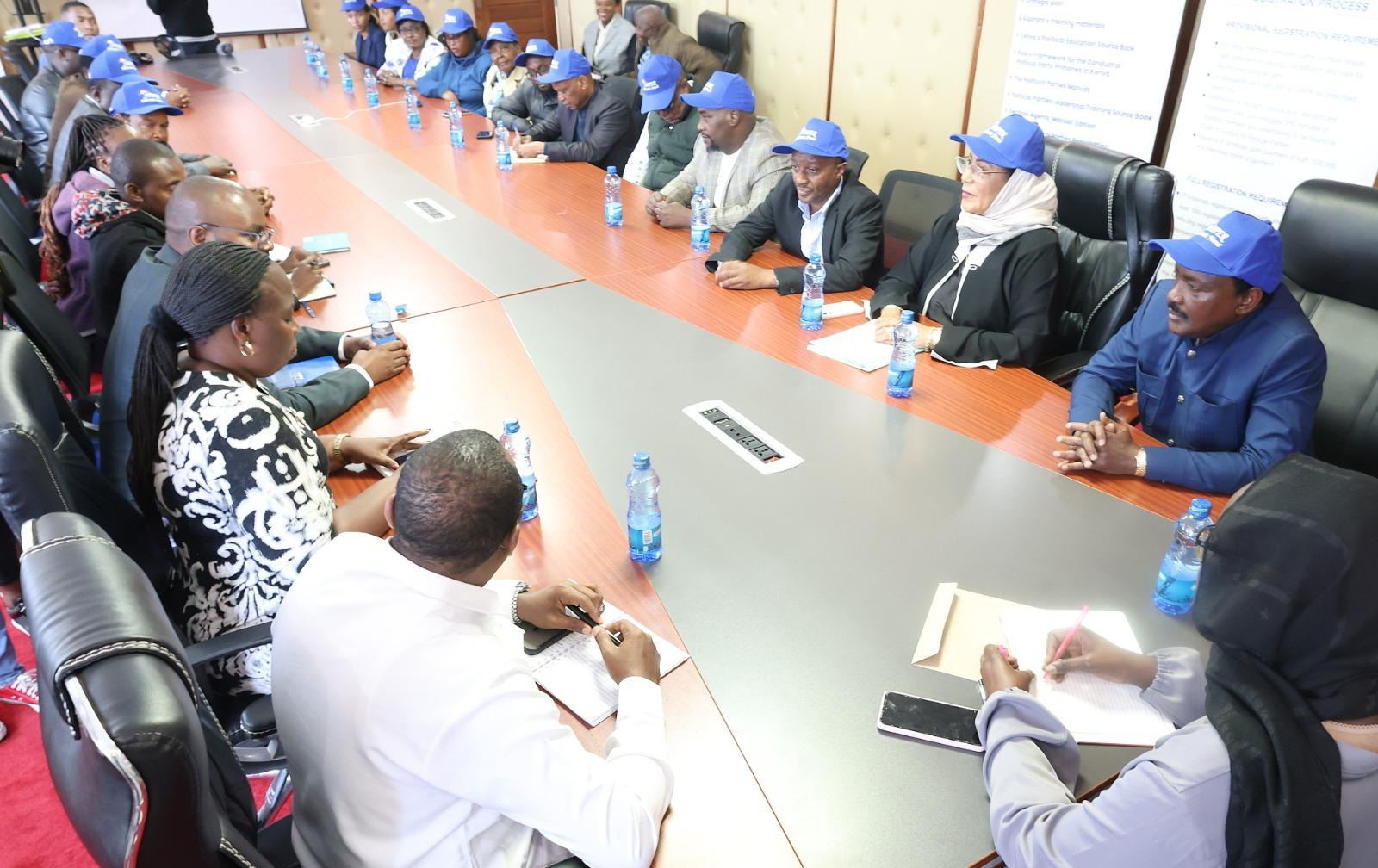
Wiper’s rebranding is not its first transformation. Founded as ODM–Kenya in 2006 after the 2005 constitutional referendum, it became Wiper Democratic Movement–Kenya in 2011 to distinguish itself from ODM. In 2021, it dropped the “Kenya” tag, retaining the umbrella symbol. Past attempts to rebrand, such as the proposed One Kenya Movement in 2018, aimed to bolster Kalonzo’s presidential bid but fizzled out. The current rebrand, however, is the most significant, with a clear focus on youth and national appeal.
The party’s history is marked by Kalonzo’s loyalty to opposition coalitions, often at the cost of his own ambitions. His support for Raila in 2013, 2017, and 2022 has earned him respect but also the “perennial deputy” label. The Wiper Patriotic Front seeks to rewrite this narrative, positioning Kalonzo as a unifying leader capable of defeating Ruto in 2027.
The rebrand has broader implications for Kenya’s political economy. By prioritizing youth engagement, Wiper aims to address pressing issues like unemployment and access to national IDs, which Kalonzo has championed. The party’s critique of Kenya Kwanza’s economic policies, including rising poverty levels, resonates with many Kenyans. Kalonzo recently accused the administration of betraying “hustlers and mama mbogas,” a sentiment echoed by Gachagua.
The rebrand also boosts Wiper’s organizational capacity. The appointment of Charles Lemein and plans to expand membership signal a grassroots push. The party’s new headquarters, relocated to a modern complex on the Southern Bypass in 2018, rivals those of Jubilee and ODM, enhancing its logistical capabilities.
As Wiper Patriotic Front prepares for its official launch, Kalonzo faces the dual challenge of consolidating opposition support and maintaining momentum. The party’s focus on Gen Z and national unity is a gamble that could pay off if it sustains youth engagement and forges a viable coalition. Kalonzo’s rejection of a rumored merger with UDA, emphatically stated on July 18, 2025, reinforces his opposition credentials.
The rebrand has already generated buzz, with X posts from outlets like @K24Tv and @TheStarKenya highlighting its significance. However, success will depend on Kalonzo’s ability to navigate internal rivalries, counter emerging contenders, and deliver on his promise of a “liberation journey.” With the 2027 election looming, the Wiper Patriotic Front is poised to reshape Kenya’s political narrative.
Kalonzo Musyoka’s rebranding of Wiper as the Wiper Patriotic Front is a bold step toward redefining his political legacy and Kenya’s opposition. By embracing Gen Z’s patriotism, shedding the Ukambani tag, and positioning himself for 2027, Kalonzo is betting on a new era of unity and liberation. While challenges remain, the rebrand injects fresh energy into Wiper’s campaign, setting the stage for a high-stakes electoral battle. As Kenya watches, the Wiper Patriotic Front’s journey will test whether a name change can spark a political revolution